Soft Robotics Biological Inspiration State of the Art and Future Research

State of the art
Exploring Roppongi and Tennozu, two of Tokyo's artsiest neighbourhoods
Nosotros know information technology's difficult to believe, only Roppongi, Tokyo'south glitzy underbelly of pricey alcohol, sleazy clubs and boutique shopping, lives a double life equally the city's fine art hub. The capital'south near famous entertainment district, once known as 'Loftier Touch Town', prides itself on an impressive assortment of minor galleries and big museums – the cultural legacy of gentrification efforts over the last decade.
Farther southeast, Tennozu Isle is no stranger to the art, or artifice, of transformation from the lesser upward either. In fact, the artificial isle was literally dredged up from the depths of Tokyo Bay during the 1920s and '30s. Recently, extensive waterfront planning has seen the hitherto quiet warehouse district re-sally equally a be-muraled town dotted with canalside cafés, high-ascent part buildings, hip hotels and fine art galleries.
Roppongi
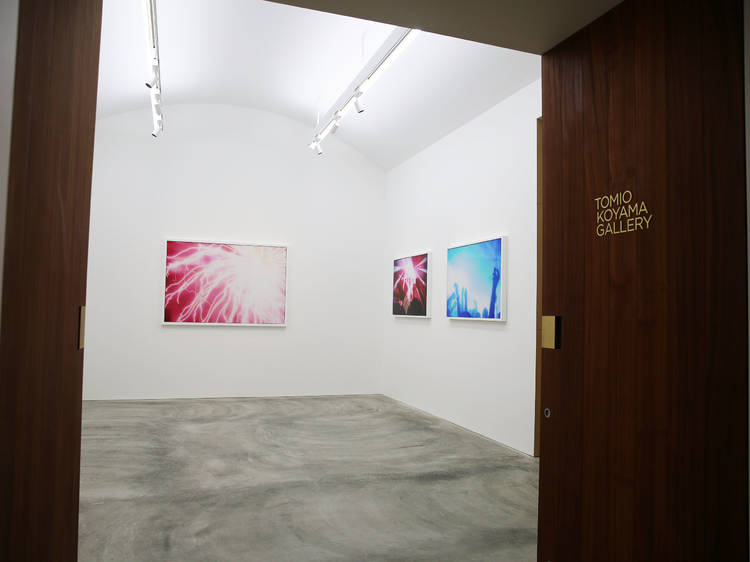
This year, Roppongi'due south art cred was raised to new heights with the opening of the Complex665 building (6-five-24 Roppongi, Minato-ku), which houses a trifecta of influential galleries: Tomio Koyama, ShugoArts and Taka Ishii. The building sits on a residential back street tucked away from the hustle and bustle of Roppongi, but is hard to miss thanks to what appears to be a squiggle painted on its side. This symbol is the logo designed for Complex665 by creative person Yoshihisa Tanaka, who imagined how a 'fictional artist named 665 might sign their own work'.
A major player in Tokyo'southward contemporary art scene, Tomio Koyama Gallery moved into the second floor of the building from their previous location in Sendagaya, employing young architects Toru Murayama and Ayako Kato to design their new ii-room exhibition space. They represent an impressive roster of artists in Japan, including wunderkind photographer Ryan McGinley, American postal service-minimalist Richard Tuttle and Yoko Ono.
As well on the second floor is ShugoArts, who have championed the avant-garde of Japanese art since the mid-'80s. Their gallery was designed past architect Jun Aoki, as well responsible for facelifting the façade of the Louis Vuitton building in Ginza. Dissimilar their flatmates, ShugoArts keep the shop open up on Sundays.
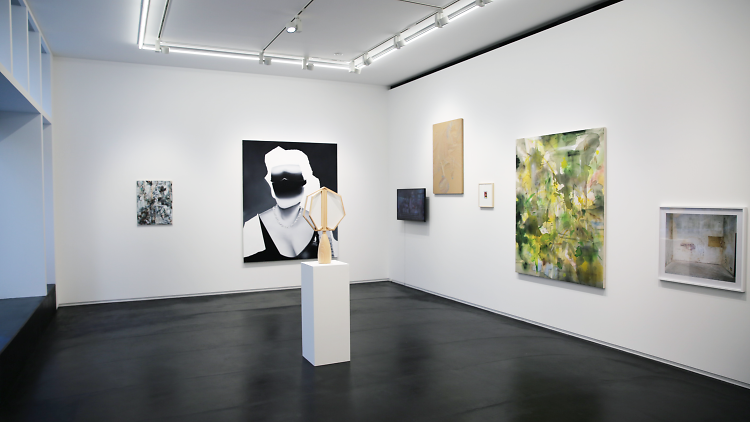
Calling dibs on the top bunk are Taka Ishii Gallery, who correspond heavy-hitters like Elmgreen & Dragset, Nobuyoshi Araki, Daido Moriyama and Thomas Demand. Furniture and interior design gurus Broadbean, whose offices occupy the basis flooring, were enlisted to design the sleek gallery infinite on the third floor, which wonderfully feeds off natural light coming in from the constitute terrace.
If you've enjoyed killing a whole flock of birds with 1 stone, then head over to the Piramide Building (half-dozen-6-9 Roppongi, Minato-ku), which is another dandy example of the tried-and-tested 'power in numbers' model of fine art collectives. Leading galleries Ota Fine Arts and Wako Works of Art are amidst its famous tenants.
Rising above the remainder both in pinnacle and, arguably, in might, the 238-metre Roppongi Hills Mori Tower is dwelling to the Mori Art Museum, which holds some of Tokyo'southward most aggressive and influential exhibitions. A retrospective dedicated to the Indian artist N South Harsha will be unveiled in Feb 2017.
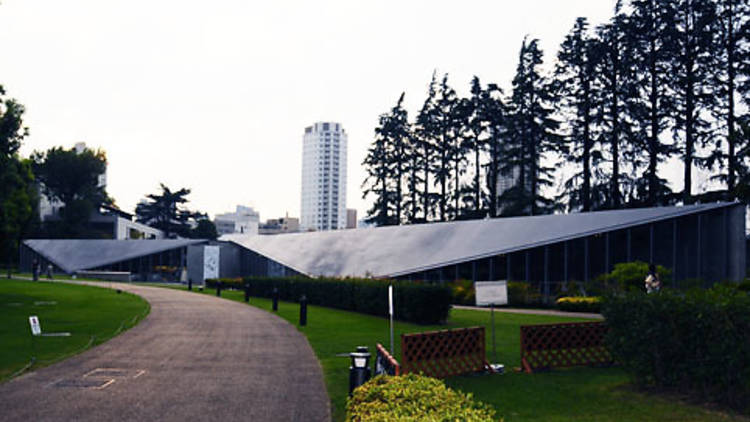
The brainchild of fashion (and fragrance) designer Issey Miyake and fellow design greats Taku Satoh and Naoto Fukasawa, 21_21 Design Sight more than than underscores Roppongi'due south role as the focal point of Tokyo's art scene. The common focus of their ever-changing lineup of exhibitions is interdisciplinary blueprint.
The National Art Center (NACT), designed past Kisho Kurokawa of Nakagin Capsule Belfry fame, boasts the largest exhibition space of whatever museum in Japan. Unlike most of its counterparts, NACT is an 'empty museum', which means information technology does non have a permanent collection, instead choosing to commission ane-off exhibitions – their Monet show was the second almost visited exhibition in the world in 2007.
Located in Tokyo Midtown and designed by renowned builder Kengo Kuma, the Suntory Museum of Fine art possesses the biggest collection of Japanese arts and crafts in the state, comprised of a whopping 3,000-plus objects. Their tea ceremonies, staged on the sixth flooring every second Thursday, are a must exercise.
And for the 'Peanuts' fans out in that location, Roppongi has a Snoopy Museum, showcasing Charles M Schulz'due south original drawings and art for the beloved series. A number of the cartoonist's early works, vintage collectibles and other materials are besides on display.
Tennozu Isle
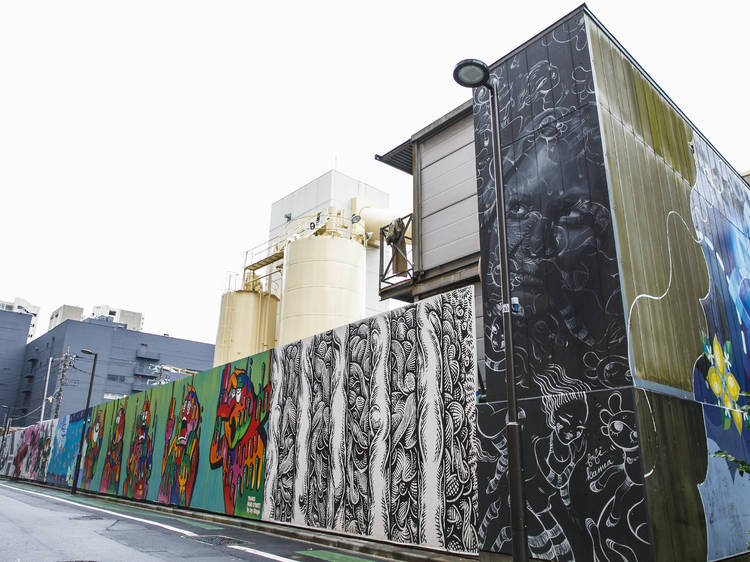
Backed by the Terrada warehouse visitor, which does far more than only stock Tokyoites' leftover property, Tennozu's new Archi-Depot museum displays a whopping 116 architectural models by Japanese starchitects, including works by Kengo Kuma, Shigeru Ban and Riken Yamamoto. While the exhibition warehouse isn't exactly a sight to behold, the architectural models – depicting both real buildings and unrealised projects – gleam similar miniature cabinets of curiosities. Afterward paying a visit to Archi-Depot, you lot're certain to walk away with a renewed appreciation for Tokyo's cute buildings, often overlooked in the relentless hustle and bustle of our beloved metropolis.
Just a rock's throw away from Archi-Depot lies the striking art supplies 'laboratory' Pigment, designed past Kuma and inspired past the expect and feel of bamboo. Information technology stocks more than than 4,500 colour pigments, 50 kinds of animal glues, and a number of top-quality traditional painting tools including over 200 antique ink sticks. The staff are all well-versed in the intricacies of the products and are happy to testify you lot how to use them.

Taking a cue from their comrades over in Roppongi, four contemporary art galleries recently decided to nestle confronting each other on the 3rd floor of the Terrada Art Complex. The quartet is comprised of Kodama Gallery, who are getting ready for a solo testify by Japanese creative person Gaëtan Kubo opening January 14; Urano, representing domestic talents such as Takahiro Iwasaki, who will exist flying the flag for Japan at the 2017 Venice Biennale; Yamamoto Gendai, who count the legendary luminary Richard Serra among their artists; and Yuka Tsuruno Gallery, known for their collaborations with renowned artists Candida Höfer and José Parlá. Lest you lot forget your surrounds, the galleries are located inside a fully operating warehouse and are only accessible by a service elevator.
Equally the former and current residents of neighbourhoods like London's Shoreditch and New York's Brooklyn will tell you, gentrification is a double-edged sword that tears through the old to make style for the new. Whichever side of the tertiary wave café/local caff divide you're on, the number and density of art galleries is ofttimes a good litmus test for how far a neighbourhood has come down the line. Less than half an hour apart, Roppongi and Tennozu Isle offering 2 different cases to study for those interested in the sociocultural effects of Tokyo'due south urban planning. Or you lot could merely look at the art.
Terrada's main warehouse (two-6-10 Higashi-Shinagawa, Shinagawa-ku) is holding an exhibition on David Bowie from Jan 8 to Apr 9 – be sure to go your tickets in advance.
Find more galleries in Roppongi
Source: https://www.timeout.com/tokyo/art/state-of-the-art
0 Response to "Soft Robotics Biological Inspiration State of the Art and Future Research"
Post a Comment